Highlights Salon NYC; Different Types Of Color Methods
There are many reasons why hair consumers want to change their natural hair color. The reasons can range from wanting a new look to being bored with their natural color to wanting to cover gray. Hair color is one of the easiest and quickest ways to instantly change your image. Just think about all the celebrities like Lindsay Lohan, Jessica and Ashlee Simpson who have morphed through a wide range of hair color in a very short period of time.
Believe it or not there are many different methods for altering your natural hair color.

The most common methods include the following:
Hair Color: Dimensional Color – Highlights, Lowlights, Twilights, Multi-Dimension
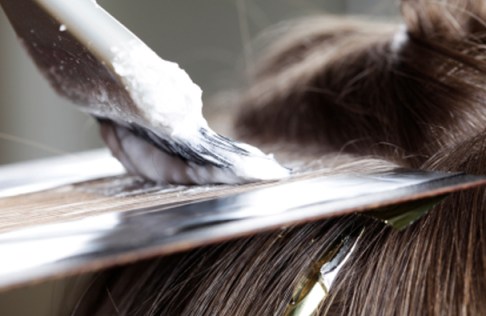
Dimensional hair color is known by hair pros and consumers as highlighting.
Highlighting involves the systemic selection of specific strands in pre-defined locations on the head and then applying a chemical formulation that results in either lightening or darkening the target strands a number of levels. When the strands are bleached and/or colored to be lighter than the base color, this is known as highlighting.
Conversely, when the target hair is colored to be darker than the base color it is known as lowlighting. In some cases, hair is highlighted and low-lighted in the same dimensional color process. Also, contrasting colors may be added.
For example, a blonde with a natural dark sandy base might be highlighted with light buttery blonde highlights, low-lighted with complementary caramels and punched up with a few strands of cherry or ruby red. This would be defined as multi-dimensional color.
When just a very subtle highlight, lowlight or color change is desired it is referred to by some hair color experts as twilights. It is considered to be the must non-invasive type of multi-dimensional color.
Allover Hair Color
When one color is applied to the existing base, it is known as allover color application. The color that is applied can be lighter, when a bleach or other lift agent is added, or darker when a type of color is added.

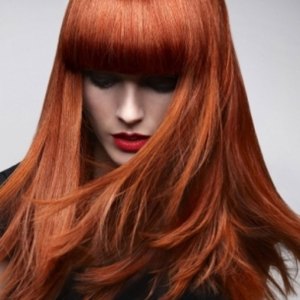
Hair color generally falls into the following categories:
Semi/Demi-Permanent – Lingers through up to 20 shampoos. Deposits color between cuticle and cortex. May contain some peroxide and/or ammonia.
Permanent – Cuticle is opened and color is deposited down into the cortex. Contains peroxide and ammonia. Color lasts until it grows out, is cut off or is re-colored.
Highlights – Lifts pigments from the cortex. Contains peroxide, bleach and ammonia.
Double Process Color – Cuticle is first opened and hair is lightened 4-6 levels with peroxide, ammonia and bleach. New color is then deposited via a toner into the cortex through the cuticle.

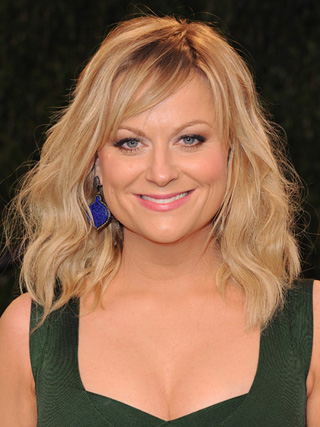


 Charlize Theron’s Buttery Blond
 Get long, cascading curls with high shine. First, wash and deep condition so you get a healthy, glossy shine. Dry hair with a round brush. Then use a large curling iron and, alternating two-inch sections, roll hair around the barrel in one direction and then again in the other direction to create a ripple effect. Once you’re done, spritz everything with an aerosol shine spray.
 First, consider a few layers. “The longest styles look even longer right after a good cut that adds movement even if it takes off half an inch,” says NYC stylist. If you haven’t gotten to the stylist yet, use a curling iron and roll two- to three-inch sections halfway up the barrel. Spritz with hairspray and then pull the curls out so they turn into long, loose waves at the bottom.
 To get perfect, tight curls sans frizz, you need a cut that supports your curl pattern. Make sure to tell your stylist that you wear your hair naturally so she can give you the cut you need. Make sure to deep-condition overnight so you get that extra dose of moisture coarse curls need. Run a thick leave-in conditioner and serum through your hair.

 Fine Artistik Salon NYC - Best Hair Salon in NYC!